Yes, you can sell a house with foundation problems in Utah as-is. You just have to disclose the structural issues upfront and decide whether you want to pay for engineered repairs before listing or sell directly to a cash buyer.
The reality along the Wasatch Front is simple. Foundation movement scares off regular buyers immediately. Mortgage lenders won’t fund a loan when an appraiser spots unverified structural shifts or cracked basement walls. That leaves most Utah owners choosing between dropping tens of thousands of dollars on foundation contractors or selling the home for cash to someone who takes on the structural risk.
Why Utah homes develop foundation problems
Utah’s dry desert air tricks a lot of homeowners into thinking their foundations are safe from water damage. In reality, our weather cycle is rough on concrete footings.
Along the Wasatch Front, houses sit on heavy expansive clay. You run into it constantly throughout Salt Lake County, Utah County, Davis County, and Weber County. When spring snowmelt rolls down from the mountains and lawn sprinklers kick on, that clay soaks up moisture and swells like a sponge. It pushes hard against basement stem walls. Then July arrives with 100-degree heat. The dirt dries out, shrinks, and pulls away from the concrete. Over years, that constant pushing and shrinking cracks basement floors, bows walls inward, and drops exterior footings.
Down in Washington County, the dirt causes a different kind of structural headache. Cities like St. George, Santa Clara, and Hurricane sit on collapsible desert soils and gypsiferous clay beds. As documented by the Utah Geological Survey’s Problem Soil and Rock Hazards guide, these soils lose strength and collapse when water soaks into them. When you combine that with flat yard grading, roof downspouts dumping rainwater right next to the foundation, or slow plumbing leaks beneath the slab, you get severe structural movement.
Warning signs inspectors and appraisers look for
Hairline shrinkage cracks show up in plenty of Utah basements. That’s normal concrete curing, and bank appraisers rarely worry about it.
Real structural settlement looks completely different. Licensed home inspectors and mortgage underwriters spot it immediately, and it will stop a loan dead in its tracks.
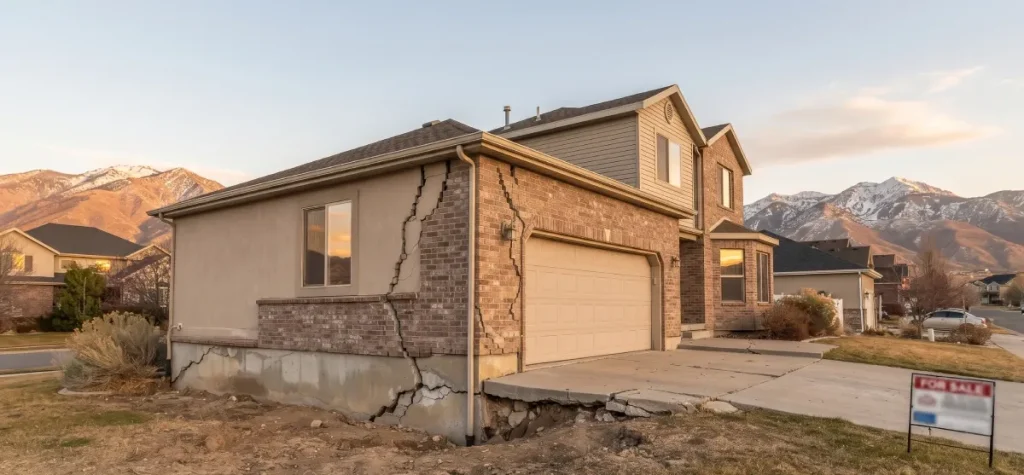
You don’t need an engineering degree to spot the obvious signs. Start in the basement. If you see horizontal cracks running across poured concrete walls, exterior soil is actively shoving the wall inward. In block or brick foundations, shifting ground creates stair-step cracks that trace right through the mortar lines.
Upstairs on the main level, the damage shows up in daily frustrations. Doors start rubbing against their frames or refuse to latch shut. Windows bind in their tracks. You might feel a noticeable slope when walking down a hallway, or spot diagonal cracks shooting out from the drywall above doorframes.
Outside, the separation gets even clearer. Brick chimneys lean away from the siding. Front entry steps pull away from the porch. In the garage, slabs crack down the middle and drop several inches below the driveway. Once an inspector notes these red flags on an appraisal report, financed buyers start heading for the exit.
How foundation issues block a traditional Utah MLS sale
Selling through the Utah MLS with structural problems is an uphill battle right now.
According to Redfin’s Utah housing market data, Utah’s median sale price sits at $517,830, homes take a median of 55 days to go under contract, and housing supply averages around 6 months. On top of that, Freddie Mac’s Primary Mortgage Market Survey shows 30-year fixed mortgage rates hovering around 7.28%. Buyers are already watching every single dollar of their monthly payment.
When those buyers spot cracked foundation walls, three roadblocks derail the sale.
First, mortgage underwriting stops in its tracks. Conventional, FHA, and VA appraisers can’t ignore active settlement. If an appraiser flags cracked basement walls, the lender will require an evaluation from a licensed structural engineer before approving the mortgage. If that engineer calls for stabilization, the bank won’t release loan funds until every repair is finished, permitted, and signed off.
Second, repair bids balloon quickly. Fixing a damaged foundation usually requires driving steel push piers or helical piers deep into the ground until they hit load-bearing rock. That work easily runs $10,000 to $30,000 or more out of pocket before you ever get to closing. And here’s the catch: once a contractor brings in an excavator and digs up your yard, they often find rotted mudsills, broken footing drains, or crumbling concrete that add thousands more to the final bill.
Third, relisting crushes your negotiating power. If a buyer walks away after the home inspection, your property goes right back on the market. Other buyers see the contract fall through and assume the house has major flaws. To get anyone back through the door, you have to slash your asking price, all while property taxes, utilities, and mortgage payments keep draining your bank account.
If you’re wondering whether spending money on repairs makes sense in this market, read our breakdown on whether Utah homeowners should renovate before selling.
Repair first vs. selling as-is for cash in Utah
Every Utah owner dealing with foundation settlement faces the same trade-off. Do you spend months managing soil engineers, excavation crews, and city inspectors before listing? Or do you sell the property as-is to a buyer who takes on the structural risk?
Here’s how those two options compare in practice:
| Factor | Repair First and List on MLS | Direct Cash Sale As-Is |
|---|---|---|
| Upfront cash outlay | Engineer reports, city permits, and heavy foundation stabilization bills | Zero out-of-pocket repair spending |
| Lender and appraisal hurdles | Bank appraisers and underwriters can hold up closing until repairs are completed | No bank mortgage, underwriting delays, or lender appraisals |
| Closing timeline | Contractor delays plus 55 to 90 or more days on the market and in escrow | Flexible closing date, often in 7 to 14 days |
| Agent fees and carrying bills | 5% to 6% in commissions plus ongoing mortgage, property tax, and utility payments | Zero agent commissions, zero fees, and an immediate stop to holding bills |
Skip structural engineer delays and open-ended repair bids
Holding a property with foundation issues drains your cash every single month through loan interest, property taxes, and general upkeep.
You don’t need to put your plans on pause or drain your savings account on open-ended repair bids. At Prudent Home Buyers, we buy houses throughout Utah in their exact current condition. You don’t have to hire a structural engineer, deal with city permits, or patch a single crack.
Our process is simple and keeps you in full control:
- Tell us about your home: Share a few details about the house, where it sits, and the foundation issues you’ve noticed.
- Look at your cash offer: We inspect the property and give you a straightforward, fair cash offer with zero obligation and zero pressure.
- Select your next step: If the offer works for you, you pick your closing date. If you need extra time to pack or find your next home, we can arrange a Late Checkout agreement so you can stay in the house after closing.
Trade on your own time, not the market’s. Get My Utah Cash Offer today and see what your property is worth without spending a single dollar on repairs.
Utah disclosure rules still apply on as-is sales
Selling as-is means you aren’t agreeing to fix broken concrete or hand the buyer repair credits at closing. But it doesn’t wipe out your legal duties under Utah law.
Under rules enforced by the Utah Division of Real Estate, sellers must complete the Seller’s Property Condition Disclosure. You have to disclose all known material defects in writing. That includes past foundation cracks, basement water seepage, grading modifications, French drains, and any previous engineering reports you have on file. Honest disclosure protects you from post-sale legal headaches and keeps title and escrow moving cleanly. Since cash buyers expect to handle repairs themselves, sharing what you know makes the entire sale smoother.
There’s another tax detail you should keep in mind if you move out before the house sells. Under Utah State Tax Commission Primary Residential Exemption guidelines, a qualifying primary residence receives a 45% exemption, meaning you are taxed on only 55% of the property’s market value. But if you move out and leave the house vacant while trying to find a buyer, the county can revoke that exemption. That means you could end up paying property taxes on 100% of the home’s fair market value, which almost doubles your tax bill.
To see how professional local investors review property defects without playing pricing games, read our guide on how legitimate cash home buyers in Utah work.
Frequently asked questions about selling a house with foundation problems in Utah
Can I sell a house with foundation problems in Utah without fixing them first?
Yes, you can legally sell the house without touching a single crack. Utah law lets you sell any property in its present condition as long as you disclose known material problems on your state disclosure form. Because mortgage lenders won’t approve loans on homes with unverified structural movement, cash buyers handle most of these sales.
Do I need a structural engineer report before asking for a cash offer?
No. You don’t need to spend $500 to $1,500 on an engineer’s evaluation just to get a cash offer. Reputable cash home buyers inspect the foundation settlement themselves, check neighborhood soil conditions, and calculate the cost of installing piers. But if you already have a home inspection or engineering report, sharing it helps speed up the process.
How much value does a house lose with foundation problems in Utah?
Unaddressed foundation settlement typically knocks 10% to 25% off a home’s value compared to similar turnkey properties nearby. That discount accounts for the estimated cost of helical or push piers, plus a risk cushion for excavation permits and unexpected soil conditions. But when you factor in 6% Realtor commissions, repair delays, and months of mortgage holding costs, selling directly for cash often leaves you with very similar net take-home money without any of the construction headaches.
Ready to sell your Utah house with foundation problems as-is?
You don’t have to let cracked basement walls or settling footings trap you in a home you’re ready to leave.
Prudent Home Buyers buys houses with structural movement, settling concrete slabs, and foundation cracks across Utah. We regularly purchase homes throughout Salt Lake County, Utah County, Davis County, Weber County, and south through Washington County.
You can bypass the contractor bids, avoid mortgage lender rejections, and skip months of stressful waiting. We let you trade on your own time, take care of all the paperwork with local title companies, and close on the exact date you choose.
Unlock your equity and start your next chapter today. Reach out to sell your house fast in Salt Lake City and across Utah on your own terms.