
Being threatened with foreclosure is so frightening and isolating. If you’re in a situation where you are seeking help to stop foreclosure, I would imagine that you are facing more than just delinquent house payments; stress, anxiety caused by uncertainty, and fear of what lies ahead may also be taking a toll.
And the most essential thing you need to realize is that foreclosure can be avoided. Even if a notice has already been issued or legal action has begun, there are ways to protect your interests and move on with clear paths ahead.
This guide will help explain what foreclosure is, what happens if you ignore it, and the best way to prevent foreclosure when time is limited.
What Is Foreclosure, and How Does It Work?
Foreclosure is a legal process through which a lender attempts to recover the balance of a loan from someone who has stopped making mortgage payments. After the loan defaults, the lender may proceed to recover the unpaid balance by selling your property.
Foreclosure laws differ by state, although, in general terms, foreclosure means losing the roof over your head and damaging your credit history. That is why taking action early on is important before the deadlines pass.
What Are the Different Types of Foreclosure in the USA?
Understanding the foreclosure process in your state helps you know how much time you really have.
Judicial Foreclosure Explained
Judicial foreclosure involves the court system. The lender has to file a lawsuit and prove the default before auctioning off the home. This process is common in most of the states and usually takes longer, giving homeowners more time but also more stress.
Non-Judicial Foreclosure Explained
Non-judicial foreclosure occurs outside the courts and proceeds much faster. It is allowed in many of the states if there is a power-of-sale clause available. The timeframes are shorter, and options disappear if action is not taken early enough.
Strict Foreclosure (Rare Cases)
Without an auction, lenders may take ownership in limited states and situations. Homeowners are given the smallest window to pay the balance or lose the property entirely.
Why Do Homeowners Face Foreclosure?
Most people don’t fall behind because of poor choices. Foreclosure often happens after unexpected life events, including:
- Job loss or reduced income
- Medical emergencies
- Divorce or separation
- Rising living costs
- Inherited homes with unpaid mortgages
If this sounds familiar, you’re not alone—and you still have options.
What Happens If You Ignore Foreclosure?
The most common question from any homeowner is, “What happens if I do nothing about foreclosure?” Unfortunately, the outcome is rarely reassuring.
If foreclosure is not addressed, long-term results may involve drastic harm to credit ratings that could last as long as seven years, the loss of any equity gained in the property, and eviction after the sale is complete. Homeowners can also risk heightened challenges in attempting to rent or buy a house in the future, with continued financial burden and uncertainty.
Foreclosure does not stop on its own. The sooner you take action, the more options you will preserve, and you will have more control over your situation during a difficult time.
What Is the Best Way to Prevent Foreclosure?
No single solution will work for everyone. The best way to prevent foreclosure depends on your timeline, your finances, and your goals.
Talking to Your Lender Early
Some homeowners explore payment plans or temporary relief options. Although it may help in some of these situations, the approval process takes quite a while and is not guaranteed, especially if the foreclosure deadlines are close.
Selling Your Home Before Foreclosure
For many homeowners, selling the home before foreclosure becomes the most practical and emotionally relieving option. Rather than waiting to be taken over by legal deadlines and uncertainty, this approach can stop the foreclosure process from moving forward, limit further damage to your credit, and remove the constant pressure from court notices and lender communication.
Most importantly, a sale puts you in control to move forward on your own terms, with clarity of what comes next. While letting go of a home is never easy, in many situations it becomes the decision that protects your financial stability, peace of mind, and future opportunities.
Why Traditional Home Sales Often Fail in Foreclosure Situations
Traditional listings will work against you in a time-sensitive situation. Repairs, inspections, buyer financing, and delays can push the home closer to auction. Many deals fall through at the last minute, leaving owners with fewer options.
When deadlines matter, certainty matters more.
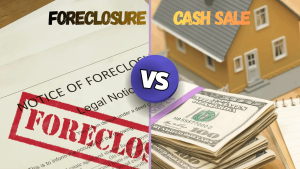
Foreclosure VS. Selling for Cash
Foreclosure and selling for cash have different implications on your credit history, having a grasp on the difference between the two can help you make sense of a difficult situation. And each can yield vastly different results in terms of control, timelines, and long-term consequences.
A closer look at Foreclosure vs. Selling for Cash – A Quick Comparison helps answer why those paths are different and why they decide to sell the home for cash instead, to save themselves added stress, uncertainty, and long-term financial consequences. The knowledge of these differences will help you make a more confident and informed decision.
Can You Avoid Foreclosure at the Last Minute?
Yes, in some cases. Even days before the auction, foreclosure may still be stopped if the mortgage is paid off in time. The critical component is speed. The faster you act, the better your chance to preserve your future.
How to Choose the Right Cash Home Buyer
In addition, when selecting a cash home buyer, there should be clear written offers, no upfront fees, transparent pricing, and no pressure. If it feels rushed or is not clear, it is okay to step back.
For more information, read [How to Choose a Trusted Cash Home Buyer in the USA] to know what exactly to check before moving forward.
Final Thoughts: You Still Have Control
Foreclosure is overwhelming—but it doesn’t define you. What matters is what you do next. Taking action now—even if you are not sure—provides options. You may investigate selling your home or simply get information, but taking action puts you back in control.
Facing Foreclosure? Get a Fast Cash Offer and Move Forward
Prudent Home Buyers can help you sell your house fast if you are behind on payments or facing foreclosure. The process allows homeowners to move forward with clarity and stop foreclosure without having to make repairs, pay fees, or feel pressured.
Sell your house as-is. Avoid foreclosure. Take back control of your future.