
Understanding the Costs and Potential Returns
Sit down with an agent anywhere around West Valley City, Magna, or Kearns, and you can practically predict what they’ll say before they even reach the basement stairs:
Rip out the cabinets, put down some quartz, paint every room that same pale gray, and watch buyers start fighting over it.
It’s an easy pitch to buy into. You imagine throwing $35,000 into the place, bumping your listing price by $70,000, and pocketing a clean check at the title company.
Except if you talk to anyone who’s actually lived through that process recently, that’s almost never how things shake out.
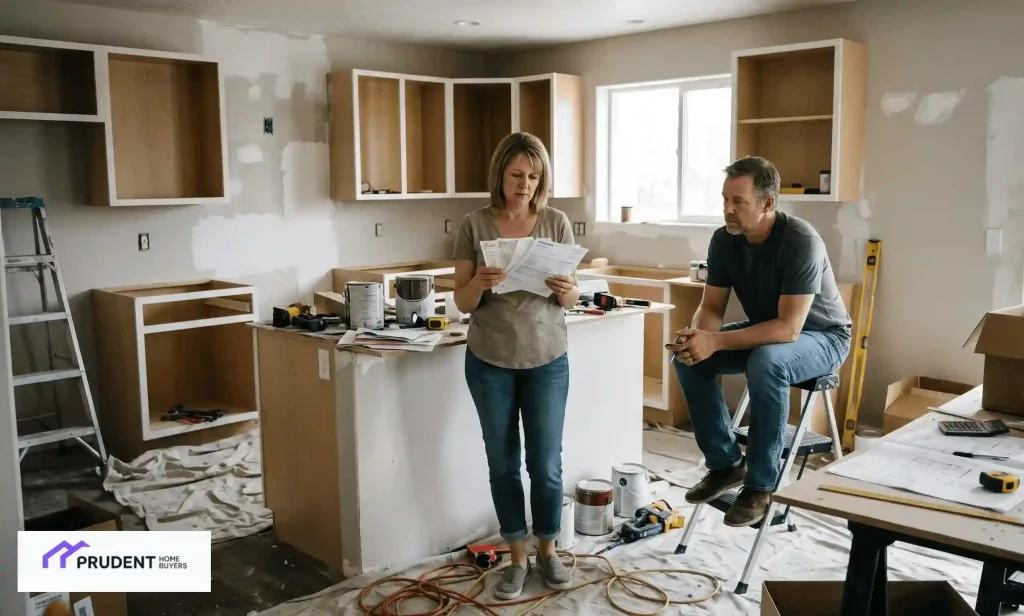
Instead of an easy payout, what people actually get is three months of sheetrock dust in their HVAC vents, an equity loan collecting interest every single week, and buyers who still show up at the open house complaining about the trim work.
Before you pull out a HELOC or put a dime on a credit card to fix up a house you’re planning to walk away from, let’s run the actual math.
What the Regional Renovation Numbers Actually Tell Us
People love to treat a home remodel like putting cash into a high-yield CD. You drop $10,000 in, you take $15,000 out.
The real estate market just doesn’t work like that.
Take a look at the annual Cost vs. Value Report from Zonda. They track real, licensed contractor receipts against verified resale prices across the Mountain Region (Utah, Idaho, Colorado). Year after year, the numbers say the exact same thing:
-
Midrange Kitchen Overhauls: You recoup roughly 49% to 51% of what you spent once the paperwork clears.
-
Upscale Kitchen Work: That drops down around 35% to 36%.
-
Midrange Bathrooms: Usually float somewhere between 60% and 70%, depending on the neighborhood.
-
Small, Surface-Level Fixes: Basic touch-ups, like changing cabinet handles, power-washing, or fixing a dead lawn patch, routinely bring back way more per dollar than tearing out rooms down to the studs.
Look at how that lands on an older split-entry out on the Wasatch Front. Say you sign off on a $40,000 remodel to open up the kitchen and modernise the bath. Regional comps show that work might bump your appraisal by $18,000 or $20,000.
You just took on all the stress, managed the subs, and wound up eating a twenty-thousand-dollar gap out of your own equity. And that’s before factoring in financing charges or the higher agent commissions you pay on a bigger listing number.
The Four Spots Where Renovation Money Vanishes
Nobody ever spends just the amount written on the original contractor estimate. It just doesn’t happen. The second demo starts on an established Utah home, extra costs start leaking out from every direction:
1. Opening up the walls in Salt Lake County
A huge chunk of the homes out here were built between the mid-50s and the late 80s. Beneath the paneling and old carpet, things get messy.
Demo crews pull off an old vanity and suddenly you’re staring at original galvanized lines, ungrounded wiring, or subfloor damage from Utah’s shifting clay soils.
Here’s the catch: once your contractor pulls a permit with the city, they can’t just slap fresh sheetrock back over an electrical hazard. They have to bring it up to modern code. Suddenly, that $15,000 cosmetic kitchen refresh gets hit with $5,000 in plumbing and breaker box upgrades you never planned for.
2. The slow burn of holding costs
Good crews stay slammed. Inspectors get delayed. Delivery trucks sit on backordered floor tiles. A job quoted for four weeks drags into month three without breaking a sweat.
While that dumpster sits in your driveway, the house can’t go on the MLS. Yet the bills keep showing up:
-
The mortgage payment
-
Salt Lake County property taxes
-
Homeowners insurance
-
Electric and gas bills (tile saws and space heaters run all day)
If keeping the place running costs you $2,100 a month, a twelve-week slip just quietly pulled $6,300 straight out of your pocket. That cash is gone.
3. High-interest financing charges
Most people don’t have $40,000 cash sitting in an account dedicated to a home they’re trying to sell. They borrow it.
Whether it’s a HELOC or charging lumber to a Home Depot card, interest starts ticking immediately. Through two months of demo, three weeks of open houses, and a standard 30-day escrow, you’re paying financing costs that no incoming retail buyer is going to refund you for.
4. Buyers have their own taste anyway
You might love white shaker cabinets and brass pulls. The couple coming to the Saturday walkthrough might hate gold hardware and want flat natural oak.
Buyers don’t pay extra for someone else’s taste. Half the time, they’ll still put in an offer under asking, or they’ll use the home inspection report to ask for a credit so they can rip out your brand-new tile and put in what they actually wanted.
Breaking Down the Real Numbers: Remodel vs. As-Is
To see why taking on renovation debt is so risky, take a look at how an estimated balance sheet looks on a typical older home in the West Valley area:
| What Happens During the Sale | Path A: Borrow Cash to Remodel & List | Path B: Direct As-Is Sale |
| Gross Listing Price | Higher on paper (reflects all the new finishes) | Evaluated based on the house’s current shape |
| Out-of-Pocket Contractor Bills | Substantial upfront cash, usually borrowed | $0 (Not a single dollar spent) |
| Surprise Code & Structural Fixes | Homeowner pays to satisfy the city inspector | Handed over to the buyer entirely |
| Carrying Costs (Mortgage/Bills) | 3 to 5 months of carrying an unlisted home | Minimal (the deal closes in weeks) |
| Interest on Borrowed Capital | Months of interest payments piling up | $0 (No loans needed) |
| Agent Listing Commissions | Typically 5%–6% on the inflated gross price | $0 (Direct transaction) |
| Buyer Inspection Credits | Very common renegotiation point after inspection | Agreed upon upfront; no surprise price drops |
| Standard Closing Costs | Seller covers title, escrow, and transfer fees | Negotiated; direct buyers frequently cover these |
| Timeline from Start to Finish | 3 to 5 exhausting months | 1 to 3 weeks |
| What You Actually Keep | A big gross number heavily chopped up by bills | A clear, predictable net check on closing day |
(Keep in mind: Every house is different. Exact net proceeds and timelines always depend on what the place needs, local comps, and the specific terms you agree to.)
A high asking price looks great on Zillow. But it doesn’t mean you walk away with more cash. Once you pay the subs, the bank, the holding bills, and the agents, what’s left over on a renovated home is often shockingly close to what you would have pocketed by selling the place completely untouched.
When Does Putting Money In Actually Make Sense?
Fixing up a property isn’t always the wrong play. There are times it works out:
-
The fixes are cheap and cosmetic: Pressure-washing the front walk, laying down mulch, replacing burnt-out exterior bulbs, and touching up baseboards cost next to nothing and help first impressions.
-
You’re sitting on plenty of cash: If you don’t have to borrow at current interest rates, you aren’t bleeding finance charges while waiting on an offer.
-
You’ve got family in the trades: You get real wholesale pricing and guaranteed schedules from people who actually show up.
-
You’re selling in a high-end luxury pocket: Buyers in high-dollar subdivisions expect everything dialed in and will pay a premium to avoid doing the work themselves.
If your place needs structural repairs, an aging roof, or complete mechanical updates, and you’d have to borrow to pull it off, the numbers just don’t lean in your favor.
The Direct As-Is Alternative
If you have zero interest in playing general contractor or taking on five figures of fresh debt, an as-is sale gives you an exit ramp.
In a direct sale, an investment group buys the property in its current state. The buyer takes on all the deferred maintenance, city permit headaches, code fixes, and cleanup.
As discussed in recent coverage on Wasatch Front homeowner pre-listing renovation risks, going as-is isn’t about setting street price records. It’s a risk-management move. You trade the hassle of managing a construction site for certainty, speed, and freedom from contractor obligations.
To see how that looks without the sales pitch, take a look at:
-
How the direct as-is home buying process works step-by-step
-
How to evaluate a no-obligation cash offer against retail comps
-
Why local sellers work with Prudent Home Buyers on complex property sales
What about Utah’s disclosure rules?
Selling “as-is” doesn’t mean hiding leaks. Utah law still requires you to fill out the standard Seller’s Property Condition Disclosure, listing known issues like past basement moisture or an aging furnace. The difference with a direct cash buyer is that those disclosures don’t blow up the deal at the eleventh hour, they’re just accounted for in the initial offer.
Frequently Asked Questions
Should I renovate my house before selling in Utah?
Only if the work is simple, cosmetic, and you can pay for it in cash. Fresh paint on a front door or tidying the yard makes sense. But borrowing thirty grand to tear out kitchens or bathrooms rarely pays for itself around the Wasatch Front. By the time you pay the contractor, the bank, and months of extra mortgage bills while waiting on permits, you often net less than if you had sold the place as-is.
Is it better to sell a house as-is or renovate?
It depends on your bank account and your timeline. If you have plenty of spare cash, trusted contractor friends, and don’t mind waiting four or five months to close, renovating can get you a higher gross sale price. But if you’re on a timeline, don’t want debt, or the house needs serious work, selling as-is lets you skip the carrying costs and walk away without construction risk.
What repairs should I make before selling my house?
Stick to low-cost fixes that make the place look cared for:
-
Patching drywall dings and touching up scuffed doors
-
Fixing leaking kitchen faucets and running toilets
-
Swapping dirty furnace filters and clearing junk out of the yard
-
Pressure-washing the driveway and front porch
Skip the major tile jobs, granite installs, and bathroom tear-outs. Those have the highest chance of blowing past your budget and rarely return 100% of their cost.
Can I sell my house in Utah without making repairs?
Yes. You can sell any residential property in Utah in as-is condition. You don’t have to fix the roof, update the wiring, or repaint before listing. The only legal requirement is filling out the state’s Seller’s Property Condition Disclosure so you’re honest about known defects. Direct cash buyers buy houses with known problems all the time and take care of the permits and repairs themselves after closing.
Weigh Your Options Before Borrowing
Selling a home is a major financial step. You deserve clear net numbers, not pressure to borrow tens of thousands of dollars on a remodel that might not pay you back.
Prudent Home Buyers helps property owners across West Valley City, Salt Lake County, and the Wasatch Front see the full picture. We can walk through what the house could bring on the open market after full repairs, compare that against your actual out-of-pocket costs, and put together a fair, zero-obligation cash offer for the home exactly as it stands.
Prudent Home Buyers to request, zero-obligation property assessment