
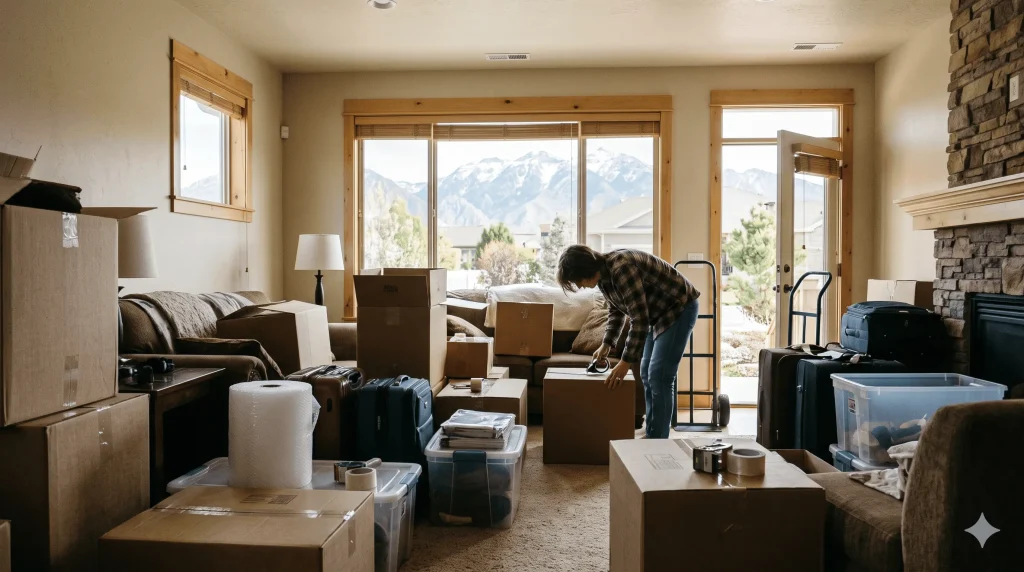
Packing boxes is exhausting enough without an unsold house hanging over your head. If you find yourself thinking, “Need to sell my house fast before moving,” you are definitely not alone. Maybe you just got PCS orders out of Hill Air Force Base, landed a job transfer outside the Silicon Slopes, or had a sudden family emergency pull you out of state.
Whatever the reason, the clock is ticking. You need a quick relocation sale. The absolute worst-case scenario is getting stuck paying two mortgages because your old property is sitting empty on the market.
From the Wasatch Front down to St. George, here is the ground truth on pulling off an urgent house sale in Utah right now, so you can cash out and move on.
The Current Reality of the Utah Real Estate Market
Let’s look at the numbers. As of late 2026, the Utah housing market has cooled off. Inventory is climbing, and the days of throwing a sign in the yard and getting ten offers by Monday are over. Right now, the median time a house sits on the market in Utah is 55 days.
But that’s just to get an offer. Once a buyer signs the contract, you usually have to wait another 30 days for their bank to approve the loan and clear title.
Add it up, and you’re looking at nearly three months just to close. If your new job starts in three weeks and you need to sell home, move ASAP, waiting 70 to 85 days for a traditional buyer is a massive problem.
3 Ways to Handle an Urgent House Sale in Utah
When time is limited, you have three primary paths to consider.
Option 1: The Traditional MLS Route
Putting your house on the market with a real estate agent is the standard play. It’s usually how you squeeze the absolute top retail price out of the property. But it is slow. You have to deep clean, hire a photographer, leave for open houses, and pray the buyer’s financing doesn’t fall apart at the last minute. If it does, you start all over. If you have the luxury of time, you can prepare your house for a traditional MLS listing in Utah.
Option 2: Renting It Out (Becoming an Out-of-State Landlord)
Some people decide to keep the house and rent it out. That sounds great for long-term wealth, but managing it from another time zone is a headache. You have to pay property managers, deal with tenants, and hope your local network can handle Utah’s unique seasonal messes, like winterizing swamp coolers and fixing frozen pipes in January.
Option 3: Selling to a Local Cash Buyer
Homeowners constantly ask us, “How to sell quickly when moving?” If you want pure speed, a direct cash sale is the answer. Cash buyers take the house completely “as-is.” You don’t make repairs. You don’t pass an appraisal. Because they don’t use traditional bank loans, they can usually close in 7 to 14 days. If you want to see how the math actually shakes out, read our breakdown on [the financial benefits of selling your house as-is for cash].
Local Utah Cash Buyers vs. National iBuyers
If you look for a quick cash offer, you’ll probably see ads for giant national iBuyers (like Opendoor). They promise speed, but they rely on computer algorithms that don’t actually understand Utah neighborhoods. They are famous for giving you a high initial offer, then demanding massive price drops after their inspector walks through.
Local Utah buyers are different. We know the Wasatch Front. When a local buyer makes an offer, it’s a firm commitment based on the actual community, not an algorithm. You get a guaranteed closing date, no last-minute surprises.
The Hidden Costs of Leaving an Empty House Behind
If you decide to move out of Utah before the house sells, it is important to factor in holding costs. Vacant properties require different financial planning and carry unique risks.
- Insurance Premiums: Standard homeowners insurance often limits or voids coverage if a property is vacant for more than 30 days. You will likely need to transition to a specialized vacant home policy, which comes at a premium.
- Maintenance Risks: An empty house in Utah during the winter requires careful monitoring. A furnace malfunction can lead to frozen pipes and extensive water damage if left unchecked for even a few days.
- Carrying Costs: Continuing to pay a mortgage, property taxes, and utilities on a house you no longer occupy can strain a relocation budget rapidly.
The Monthly Cost of an Empty Utah Home
If you leave your home on the traditional market for the current average of 70 to 85 days, your holding costs will skyrocket. For a median-priced Utah home, every extra month on the market costs you:
- Mortgage & Interest: ~$2,500+
- Vacant Home Insurance: ~$150 to $300 (Standard policies often void after 30 days of vacancy).
- Utilities: ~$200
- Property Taxes: ~$200+
The Bottom Line: Waiting for a traditional MLS buyer can easily drain $3,000 to $4,000 from your pocket every single month the house sits empty. A quick relocation sale eliminates these holding costs immediately.
How to Accelerate a Traditional Open-Market Sale
If you list traditionally on the open market but need to accelerate the process, these three steps can help:
- Price Strategically: Pricing a home 3% to 5% below recent neighborhood comps can generate faster interest and occasionally spark bidding competition.
- Get a Pre-Inspection: Paying for a home inspection before you list allows you to provide the report to potential buyers upfront, removing their fear of the unknown and speeding up their decision-making.
- Clear It Out: Removing personal items and decluttering completely allows buyers to clearly visualize the space.
You Don’t Have to Fly Back to Utah to Close: Utah’s Remote Online Notarization (RON) Laws
If you have already relocated to your new state, you do not need to book a flight back to Utah to close the sale. Utah law legally recognizes Remote Online Notarization (RON). This means that whether you sell on the MLS or to a direct cash buyer, you can sign your final closing documents and deed transfers via a secure video call from your laptop or smartphone. Your cash proceeds are then wired directly and securely to your bank account. Selling a Utah home from out of state is completely frictionless when you work with buyers and title companies equipped for digital closings.
Your Quick Relocation Checklist
If you are packing boxes and coordinating movers while trying to list a house, keeping things organized is vital. Use this checklist to keep your home transition on track:
- Transfer Local Utilities: Schedule shut-offs or transfers with Rocky Mountain Power, Dominion Energy, and your local municipal water services to avoid paying for overlap after closing.
- Update Your Insurance: If the house will be empty before closing, contact your provider to adjust your policy accordingly.
- Forward Essential Mail: Set up USPS mail forwarding at least two weeks before your move date so you don’t miss property tax or HOA notices.
- Secure Important Documents: Keep your property title, trust documents, and IDs in a personal go-bag rather than the moving truck.
- Simplify the Cleanup: If listing on the MLS, book a professional move-out cleaning service to save time during your final week.
Frequently Asked Questions (FAQ)
Can I sell my house after I’ve already moved out of state?
Yes. Through modern remote closings, Utah title companies frequently use mobile notaries and secure digital platforms, allowing you to finalize your closing documents from almost anywhere in the country. You do not need to fly back to Utah to sign the final paperwork.
What is the fastest way to handle a quick relocation sale in Utah?
If you need to sell house urgently, the fastest method is generally a direct cash sale. Because cash buyers do not rely on traditional lender financing, the standard 30-day escrow period is bypassed, allowing you to close almost immediately.
Do I need to clean or fix my house before an urgent house sale?
It depends on the buyer. If you sell on the open market, yes. However, cash buyers typically purchase properties in their exact current condition, allowing sellers to leave unwanted items, trash, or appliances behind without making any repairs.
Navigating Your Next Steps in Utah
When you are facing an impending relocation and find yourself thinking, “I need to sell my house fast before moving,” the right choice comes down to your priorities. If you have the flexibility to wait two to three months, the traditional market may yield the highest gross price. However, if your priority is a guaranteed timeline without the friction of showings, open houses, and repairs so you can move ASAP, exploring a direct sale might be the better fit.