
The Quick Answer:
Selling a Property with Municipal Violations
When a city inspector issues a formal code violation, you are placed on a strict deadline where any delays can trigger daily financial penalties that eventually escalate into municipal liens against your property. This creates a significant hurdle for traditional retail buyers, particularly those relying on FHA or VA loans, because bank underwriters will flat-out reject financing for homes with unpermitted additions or active safety issues. Fortunately, you can legally bypass these financing roadblocks by selling the property “as-is” directly to a cash buyer. Because cash investors do not rely on traditional bank loans, they are able to purchase homes with active violations or even a condemned status outright, taking on the burden of the associated fines, legal liabilities, and repair costs themselves.
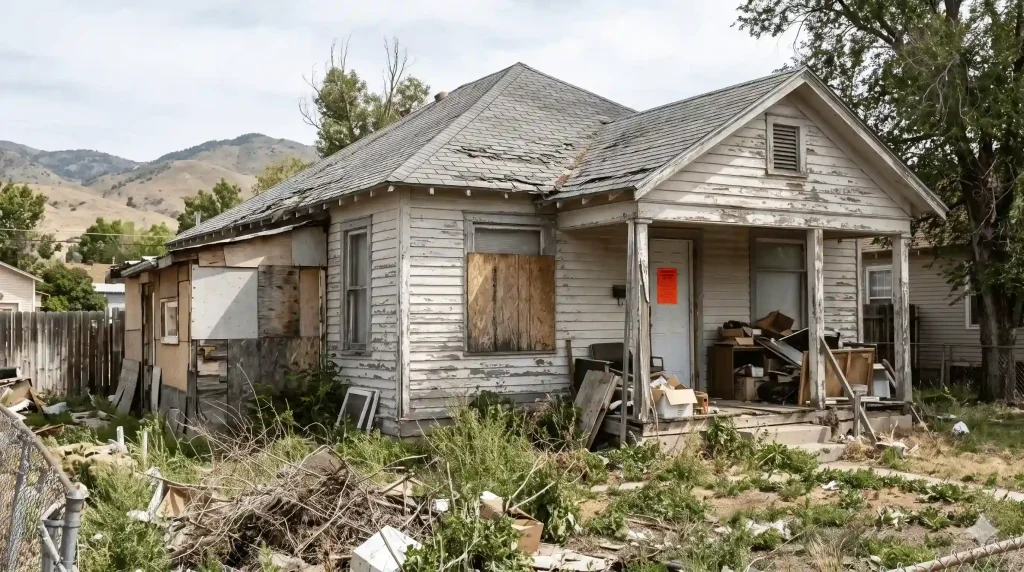
Finding a brightly colored enforcement notice taped to your front door is a gut-wrenching experience. Whether you inherited a house that suffered decades of deferred maintenance, or you just realized the previous owner finished the basement without pulling a single legal permit, municipal building departments are notoriously aggressive.
When caught in this web, the immediate fear is financial paralysis. The city is threatening you with escalating fines, traditional real estate agents don’t want to list a legal liability, and local contractors are quoting tens of thousands of dollars just to bring the house up to current 2026 building codes.
The good news? You are not financially trapped. You do not have to drain your savings to appease a city inspector. Here is exactly how a city code violation home sale works, and how you can offload the headache entirely.
The Legal Reality of Code Violations
A code violation is a formal municipal citation declaring that your property fails to meet minimum safety, zoning, or structural standards. These are not minor HOA complaints about the color of your mailbox; these are serious hazards, such as:
- Failing foundations or collapsing roofs.
- Exposed, ungrounded, or severely outdated electrical panels (fire hazards).
- Lack of running water, heat, or proper sanitation.
- Illegal structural additions or improperly converted garages.
The real danger of a sell house code violations scenario isn’t just the repair cost, it’s the timeline. Cities issue strict, non-negotiable deadlines. If you miss that window, they begin assessing daily financial penalties. Eventually, the city will file a municipal lien against the property. Once a lien is recorded on the title, you cannot cleanly transfer ownership to a standard buyer until that exact debt is paid in full.
When you sell to a professional cash buyer, the title company factors those municipal liens directly into the closing documents. The cash buyer effectively buys the debt along with the house. They pay off the city’s liens using the proceeds of the sale, allowing you to walk away free and clear.
Can I sell a house with unpermitted work?
Yes, you absolutely can sell a house with unpermitted work, but it drastically shrinks your buyer pool.
If you attempt a traditional open-market sale, unpermitted work like a DIY bathroom addition or an illegal in-law suite, acts as a massive red flag. When a retail buyer applies for a mortgage, the bank sends an appraiser to verify the property. If the appraiser notes that the home has four bedrooms, but the city’s legal tax records only show three, the bank will immediately halt the loan.
To sell traditionally, you usually have to undergo the painful process of “retroactive permitting.” This requires:
- Hiring a licensed, bonded contractor.
- Paying penalty fees to the municipality (often thousands of dollars).
- Opening up the drywall so city inspectors can view the hidden plumbing and electrical work.
- Paying to bring the old work up to modern codes.
In severe cases, the city may simply order you to demolish the unpermitted addition entirely.
A direct cash sale bypasses the banking system. Cash buyers purchase the home with their own capital, meaning there is no underwriter demanding a retroactive permit. They buy the house strictly “as-is,” fully accepting the unpermitted work and the future cost of dealing with the city themselves.
Who buys condemned houses?
There is a distinct legal difference between a house that requires heavy repairs and a house that is officially condemned. A condemnation order means the local government has inspected the property and declared it legally uninhabitable. It is a crime to live inside, and utility companies will sever the power, gas, and water connections.
So, who buys condemned houses? The buyer pool is restricted almost entirely to specialized real estate investment firms and condemned house buyers.
A traditional family cannot buy a condemned home because no conventional bank will ever write a mortgage for an uninhabitable structure. Furthermore, real estate agents in many states are heavily restricted from marketing officially condemned properties on the Multiple Listing Service (MLS) without clearing the legal status first.
Professional cash buyers target these properties because they have the heavy financial backing required to either execute a massive, full-gut rehabilitation to satisfy the city’s demands, or to bulldoze the structure entirely and rebuild from the dirt up.
Comparing Your 3 Selling Options
When you are staring down a deadline from the building department, you generally have three paths forward. Here is how they compare:
| Selling Method | Timeframe to Close | Out-of-Pocket Costs | Buyer Pool | Risk Level |
| Fix It & Sell Retail | 3 to 6 Months | High (Permits, contractors, city fines) | Large (Retail buyers with bank loans) | High (Unexpected issues found behind walls) |
| List “As-Is” on MLS | 2 to 4 Months | Medium (Agent commissions, holding costs) | Very Small (Only buyers with cash or rehab loans) | High (Deals frequently fall through due to financing) |
| Sell to a Cash Buyer | 7 to 14 Days | Zero (Buyer pays closing costs and city liens) | Direct Buyer Only | Zero (Buyer assumes all legal and financial liability) |
The Golden Rule: Total Disclosure
Whether you are trying to offload a house with a minor unpermitted deck or a fully condemned property facing demolition, you must follow one strict legal rule: you must disclose everything in writing.
In real estate law, active city code violations, unpermitted additions, and condemnation notices are considered “material facts.” You cannot just sell the house as-is and hope the buyer doesn’t check the public records. If you intentionally hide a red tag or an illegal basement from a buyer, they can sue you for fraud and misrepresentation long after the closing paperwork is signed.
When you work with a cash buyer, you simply hand them the city’s violation notice upfront. They will calculate the cost of the fines, the municipal liens, and the required repairs, and price that directly into their offer. Because they are purchasing the property with full, documented knowledge of its legal condition, you are entirely shielded from future liability.
Your Exit Strategy
When the city is breathing down your neck, you have to move fast. You generally have two choices: drain your bank account to hire contractors, pull retroactive permits, and pay off the daily fines, or sell the property as-is and transfer the headache to someone else.
A direct cash sale provides immediate relief. It stops the daily fines, prevents a forced city demolition, and gets you out from under a severe legal and financial burden in a matter of days, allowing you to finally move on with your life.