
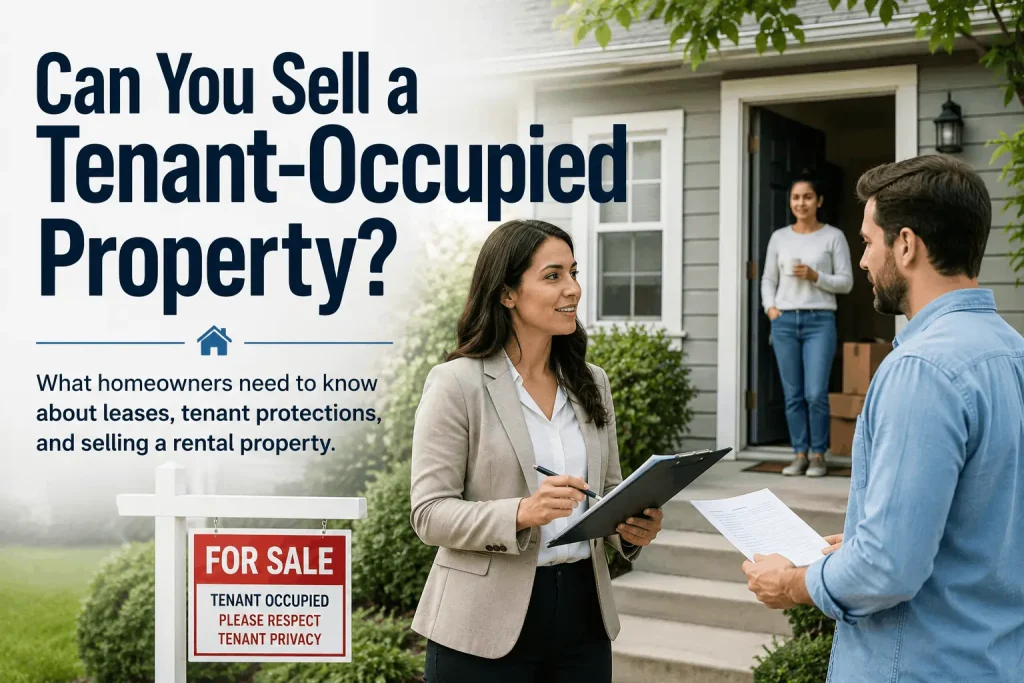
Yes, you can indeed sell a house that’s occupied with tenants. As a homeowner, you may face urgency to sell a property with tenants and it’s okay. You’re thinking if you should wait for them to leave or if you can schedule a showing while they are still in the house. Questions like that are quite normal, even you may be wondering what happens to their lease.
If you are worried about its legality, then you can relax. Zillow highlights it’s entirely legal to sell a rental home that’s occupied with tenants. All you need to do is understand how the lease, local laws, and buyer type affects the process. With this guide, you’ll be able to understand what your obligations are and how different lease types change your options. Also, you’ll get an idea of what kind of buyers make sense, and how to actually get through the process without burning your tenant relationship.
The answer to your question: Yes You Can
When you face an urgency to sell your home where tenants are already living in it, you may first hesitate to sell. However, it’s completely legal in every U.S. state to do so. It’s quite simple actually. When the property sells, the lease doesn’t disappear, it transfers to a new landlord.
Let’s say if your tenants are paying $2800 a month under a lease. This lease carries over to the buyer. Same terms, same rent, same tenant. They don’t have to go anywhere just because the ownership changed. Also, mid-lease you can’t make them leave.
How does your lease type change everything?
It’s important for you to check what kind of lease your tenant is on. Later on, it becomes the single biggest factor in how the sale plays out.
Fixed term lease
If a tenant is in the middle of a lease, they will usually have the right to stay until the lease ends. The scenario remains the same even if the property is sold. A simple example is when a tenant signs a one-year lease, you sell at the six month mark.
Month-to-Month
The month to month is a different story. The tenants can be asked to leave with the right written notice within 30 to 60 days based on your state.
No Written Lease
Even without a written lease, tenants can have legal protections. For instance, if someone has been paying rent monthly without a contract, they are typically treated as a month to month tenant legally.
Who You’re selling to matters as much as the lease
You should know that the type of buyer you’re targeting changes what the sale looks like entirely:
| Buyer type | Tenant Stays? | Lease Transfers? | Best For? |
| Real Estate investor/Landlord | Yes | Yes, at closing | Reliable tenant, steady rent income. |
| Owner-occupied buyer | No, needs vacant possession. | No | Month to Month lease or post lease sale. |
| Cash home buyer | Usually no | Depends on timeline | Flexible situations, as-is sales. |
For investors, a paying tenant is good income from day one. Lease gets transferred and rent continues, it’s actually quite straightforward. But when a buyer wants to live there, he/she might want it empty. That’s a completely different conversation you need to have with your tenant.
In this case, they will get a notice and may need to exit early. However, if there is repairwork that’s sitting on the top of it and you have an urgency to sell, it’s time to explore options that can help you do that.
The legal side you can’t skip
Tenant laws can differ depending on where you are based out of. California, Washington, and Oregon tend to side with tenants and some cities within those states go even further. Something that’s perfectly legal in Texas or Florida might not hold up in San Francisco or Portland. It’s definitely worth checking your local rules before you make any moves.
Few rules are consistent across all states. House showings need to have an advanced notice, usually 24 – 48 hours. A valid lease will survive the sale and the new owner has to honor it. Also, you can’t push someone out mid-lease just because you decided to sell the property. And buyers have the right to know about the lease, the rent, and deposit before closing. Skipping proper steps can land you in a conflict with the tenant and if you really want to avoid it, go with the legal process.
How tenants can affect your sale
You may think having tenants is a legal situation while selling your property but that’s not all. They also affect how buyers see the deal financially. If your tenant is paying below what the market currently commands, investors will price that in. A $400 monthly gap between what the tenant pays and what your unit could rent may make a buyer rethink his decision.
On the other hand, a tenant with a solid payment history is genuinely useful to mention, it may interest the buyer. Also, how the property looks during the showing is up to the tenant and not you. Lease violations such as subletting or visible damage may not look good. It’s best to sort and work on this before listing a tenant occupied property.
Practical tips for selling a house with tenants
Tell your tenant early
Don’t let them find out through a listing or a stranger at the door. Be quick to tell them and especially in writing, as soon as you decide to sell. Be transparent about their lease and how long it will stay valid.
Review the lease first
Before you list the house or serve any notice to the tenants, its important to take a look at lease. Look for clauses around showings, sale notifications, and early termination. Missing anything from the clauses may put you in a tough spot later.
Offer something for the inconvenience
When you decide to sell, your tenant would have to set their house during showings and that’s an effort from their end, not yours. Though it’s not required, you may offer a small rent reduction or a cleaning service before showing. This can really make an impression.
Written notice for every showing
Simply calling them and letting them know isn’t enough. You should send a formal notice every 24- 48 hours and keep a track record of everything. It also helps them prepare their mind for everything in advance.
Offer the tenant first right to buy
Before you list the property to the public, ask your tenants if they are interested in purchasing it. They have been living in the area, it definitely works for them. Maybe, they would consider it.
Get every agreement in writing
If you are selling your home fast, write it all down. Mention the timeline, what you’re paying and what condition the property comes back in. This is an important step so that deals stay where they are and are not just on verbal terms.
Work with an agent who knows how to do this
Not every agent is experienced in selling a tenant-occupied property. But the one who knows, understands how to reach the right buyers and handle disclosure properly. You can ask your agent if they have experience with this kind of situation or not.
Try selling as-is for a simpler process
If your property needs repairs or if you don’t want to deal with renovations while tenants are still living, selling your home for cash as-is may simplify the process. Many investors and cash buyers are willing to take rental property with tenants, to speed up the sale.
Pros and cons at glance
| With tenants in Place | Vacant Possession |
| Buyer Pool: Primarily Investors | Buyer Pool: Broader – Includes owner occupants |
| Rental Income during sale: Continues | Rental income during sale: Stops |
| Showing flexibility: limited by tenant schedule | Showing flexibility: Full Access |
| Timeline: Faster if selling to investor | Timeline: Depends on lease end date |
| Complexity: Lease transfer, tenant cooperation | Complexity: Notice periods, potential negotiation |
| Price: May be lower if the rent is below market | Price: Typically closer to full market value |
Quick summary
Selling a house with tenants is possible if you understand their lease type, your buyer, and how you can handle the tenant relationship. Tenant cooperation, lease terms, and property conditions can affect how quickly and smoothly the sale happens. It is important to keep clear communication, send a proper notice, and explore more options if you have an urgency to sell your home.
This article is for informational purposes only. Landlord-tenant laws vary by state and city, so homeowners should consult a local real estate professional or attorney for guidance specific to their situation
FAQ’s
Q1. Can a landlord sell a property without telling the tenants?
Yes, the sale can happen without their permission. However, most states require you to send a notice to your tenants for showings.
Q2. Do I have to disclose that my property has tenants?
Most require it to disclose that your property has tenants to buyers. They must know about the lease, rent amount, and deposit before closing.
Q3. Will having tenants lower my sale price?
It’s not necessary for you to lower your sale price while having tenants in your property. However, you may consider doing so if you don’t get buyers for a long time.
Q4. What’s the fastest way to sell a house with tenants?
If you have an urgency to sell, you may not be able to wait for buyers when you list your home to the public. You may want to explore more options such as investors.
Q5. Can I sell the property as-is with tenants living there?
Yes, you can. Tenant stays, lease transfers, cash buyers would take it as is. It may work well when you have an urgency to sell.
Q6. How much notice do I need to give tenants for showings?
Usually it takes 24 to 48 hours written notice, depending on your state. Maybe check the lease too.